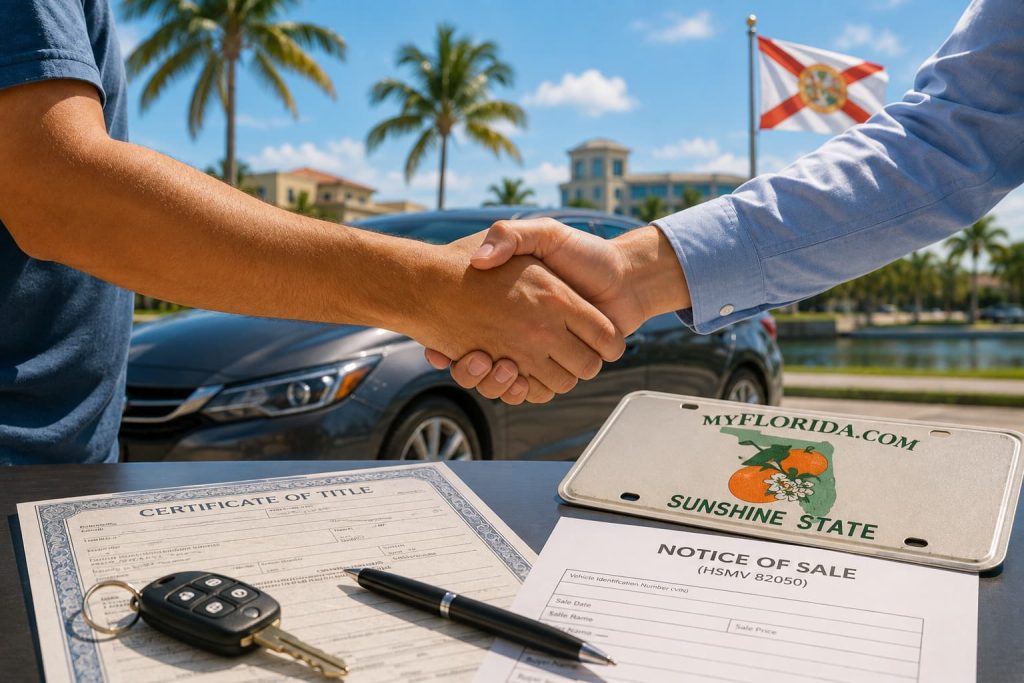
Selling a vehicle in the Sunshine State is a great way to unlock cash from an asset you no longer need. Whether you are cruising down A1A or navigating traffic on Congress Avenue in Delray Beach, owning a car in Florida comes with specific perks—like no annual emissions testing. However, when it comes time to transfer ownership, Florida has a distinct, tightly enforced regulatory framework managed by the Florida Department of Highway Safety and Motor Vehicles (FLHSMV) and administered locally through county tax collector offices.
Failing to follow Florida’s auto selling laws can leave you vulnerable to unexpected financial liabilities, parking tickets, toll violations, or even legal disputes months after the vehicle has left your driveway.
If your goal is to sell my car for cash today in Delray Beach, you must understand the rules of the road regarding title reassignments, mandatory state filings, and tax obligations. Here is your definitive, humanized guide to Florida car selling regulations so you can execute a clean, 100% compliant transaction.
1. The Core Pillar: Florida Title Transfer Regulations
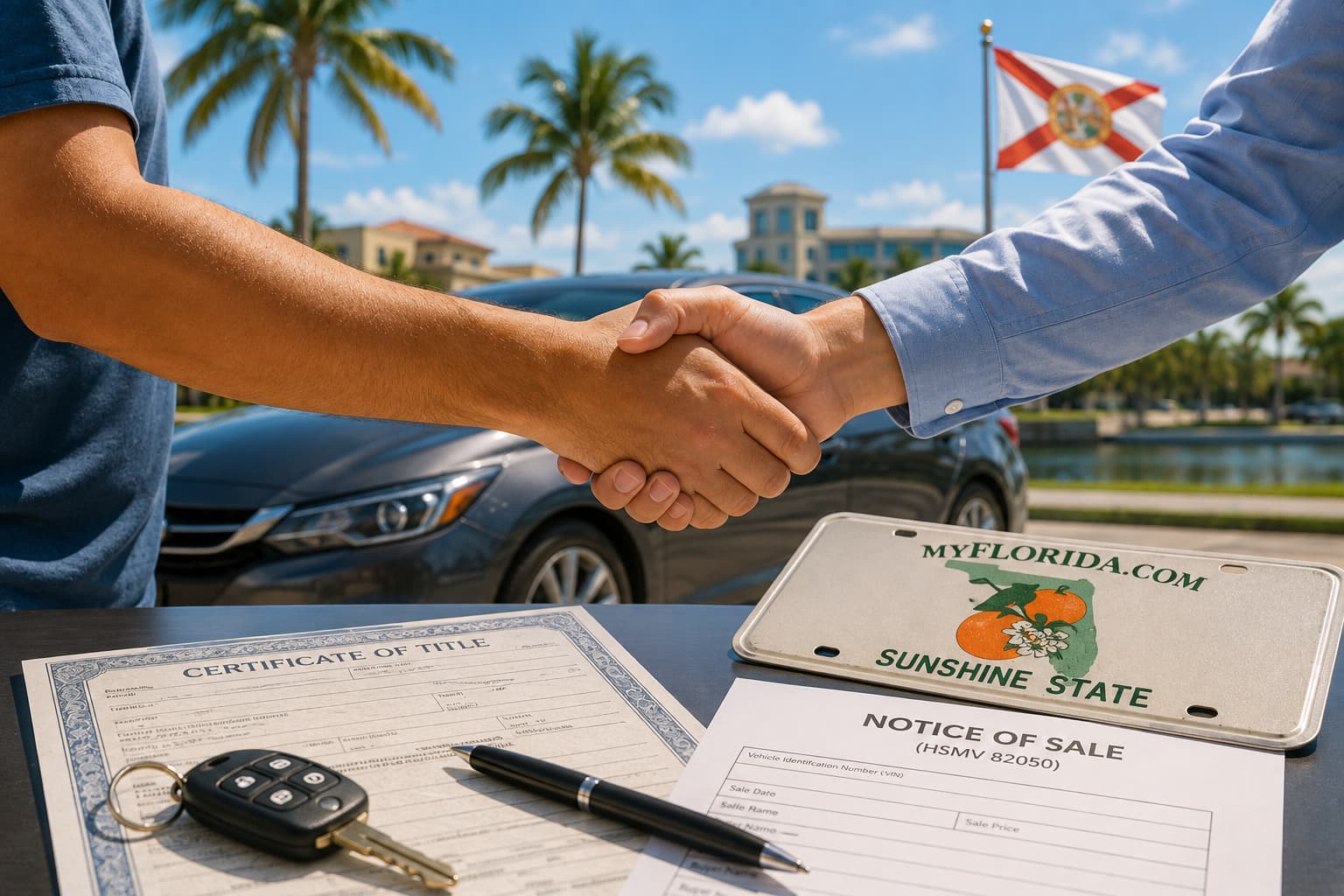
The title is the ultimate legal deed to your motor vehicle. Under Florida Statute § 319, you cannot legally complete a sale without properly transferring the Certificate of Title.
Paper Titles vs. Electronic Titles (ELT)
- Paper Certificate of Title: If you hold a physical paper title, you must complete the “Transfer of Title by Seller” section on the back of the document. You must accurately fill in the buyer’s full legal name and address, the selling price, the exact date of sale, and the current odometer reading. Every registered owner whose name is joined by “AND” on the title must sign. If names are joined by “OR,” either owner can sign to transfer ownership.
- Electronic Titles (ELT System): Florida widely uses electronic titles to prevent loss and fraud. If your title is held electronically by the state or a lienholder, you cannot simply sign a piece of notebook paper. You must either request a paper title to be printed (via the FLHSMV portal or by visiting a local service center like the Palm Beach County Tax Collector’s South County Service Center on South Congress Avenue in Delray Beach) or execute an electronic reassignment in person alongside the buyer.
2. The Mandatory Notice of Sale (Form HSMV 82050)
The single biggest mistake private car sellers make in Florida is handing over the keys without notifying the state.
Under Florida law, the seller is legally required to file Form HSMV 82050 (Notice of Sale and/or Bill of Sale) within 30 calendar days of the transaction.
Why Form HSMV 82050 is Critical for Your Protection:
- Liability Severance: In Florida, vehicle owners can be held civilly liable for damages or injuries caused by a vehicle registered in their name under the “Dangerous Instrumentality Doctrine.” Filing Form HSMV 82050 officially logs the sale in the FLHSMV database, establishing that you are no longer the operator or beneficial owner.
- Toll and Red-Light Violation Immunity: If the buyer drives through SunPass tolls or gets caught on red-light cameras before registering the car in their name, automated tickets will be mailed to the address on file. A recorded Notice of Sale is your legal shield to have those citations dismissed.
3. The “Plates Stay with the Seller” Rule
Unlike some states where the license plate transfers with the automobile to the new owner, in Florida, license plates always belong to the seller, not the car.
What You Must Do with Your Tag:
- Remove the Tag Immediately: Never allow a buyer to drive away with your license plate attached to the car, even if they promise to mail it back to you. If they commit a traffic infraction or get into an accident, that plate ties back directly to your name and auto insurance.
- Transfer or Surrender: You have two legal options for your removed plate:
- Transfer: You can transfer the plate and its registration credit to another vehicle you own within 30 days.
- Surrender: If you are not replacing the car, you must surrender the physical license plate and registration to the Palm Beach County Tax Collector.
- Prevent Driver License Suspension: Florida requires continuous Personal Injury Protection (PIP) and Property Damage Liability (PDL) insurance on registered tags. If you cancel your auto insurance policy after selling the car without first surrendering your plate to the state, the FLHSMV will automatically suspend your driver’s license.
4. Understanding Odometer Disclosures and As-Is Regulations
Federal and Florida state regulations mandate strict odometer reporting on all motor vehicle transfers for vehicles less than 20 model years old.
Odometer Disclosure Requirements:
- The exact mileage must be recorded on the title transfer at the time of sale.
- You must certify whether the reading represents the Actual Mileage, is In Excess of Mechanical Limits (for older 5-digit odometers), or is Not the Actual Mileage (indicating an odometer discrepancy or replacement).
- Tampering with, altering, or falsely declaring odometer readings is a felony offense in Florida.
The “As-Is” Private Sale Standard
In Florida, private vehicle sales are strictly considered “as-is” transactions unless an explicit written warranty is provided. Private sellers are not bound by the same Lemon Law protections that apply to new vehicle purchases from licensed dealerships. However, intentional fraud or active concealment of known major safety defects can still expose a seller to civil litigation.
Before determining whether you should sink capital into addressing minor cosmetic or mechanical flaws prior to selling, review our guide on when to fix your car before selling vs. when to sell as-is to avoid throwing money away.
5. Sales Tax and Local Surtax Logistics
In Florida, the state imposes a 6% sales and use tax on motor vehicle transactions, along with a discretionary county surtax (in Palm Beach County, this surtax applies to the first $5,000 of the purchase price).
- Who Pays? The buyer is legally responsible for paying the sales tax when they register and title the vehicle at the tax collector’s office.
- Accurate Price Reporting: Both the buyer and seller must report the true purchase price on Form HSMV 82050. The Florida Department of Revenue actively audits vehicle purchase prices against fair market value books; declaring an artificially low sales price to evade taxes is illegal and heavily penalized.
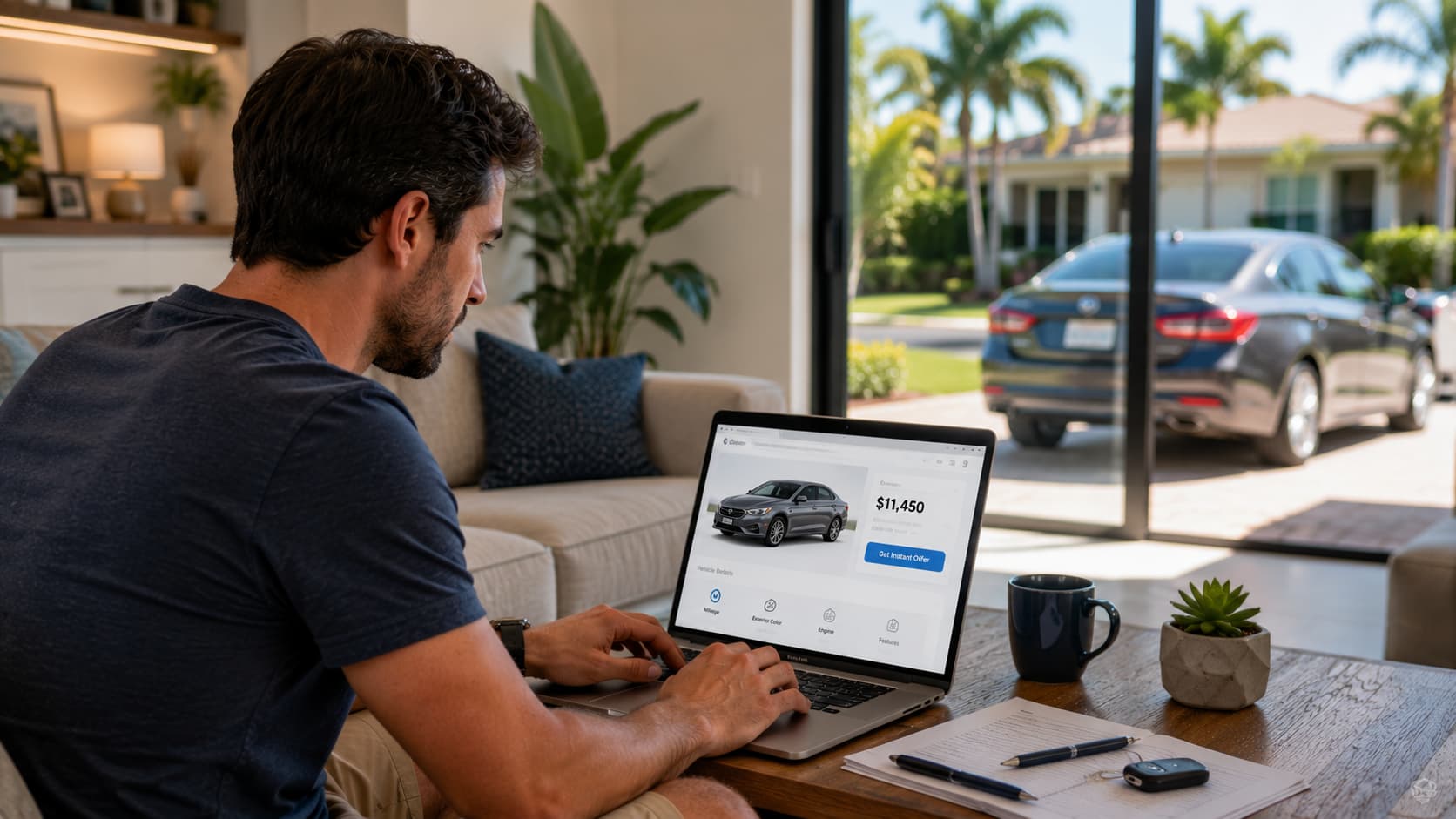
To see how market pricing, vehicle age, and economic trends impact your vehicle’s legitimate baseline value, read our detailed analysis on how car depreciation really works: understand the market.
Private Sales vs. Licensed Florida Buying Centers
Complying with Florida’s intricate paperwork web can turn a simple private sale into days of stress. Here is how managing regulations independently compares to working with a licensed entity:
| Regulatory Requirement | Private Buyer Sale | Licensed Professional Cash Buyer |
| Title Reassignment | Must be filled manually; errors void title | Executed professionally by state-certified agents |
| Lien Payoff Clearance | Complex; buyer must wait weeks for title release | Lender paid off directly via electronic wire |
| Notice of Sale (HSMV 82050) | Seller must mail or submit form in person | Handled instantly on-site at transaction |
| Tag Removal & Handling | Seller must navigate plate surrender alone | Seller guided through immediate tag retention |
| Transaction Speed | Days to weeks to finalize paperwork | Completed same-day in under 30 minutes |
The Streamlined Route: Sell My Car for Cash Today
You don’t need to spend your afternoons waiting in lines at the county tax office or worrying whether an unfamiliar buyer will properly register the car. When you choose to sell my car for cash today, you hand the administrative burden over to licensed industry professionals.
The Cash Now Auto Regulatory Guarantee
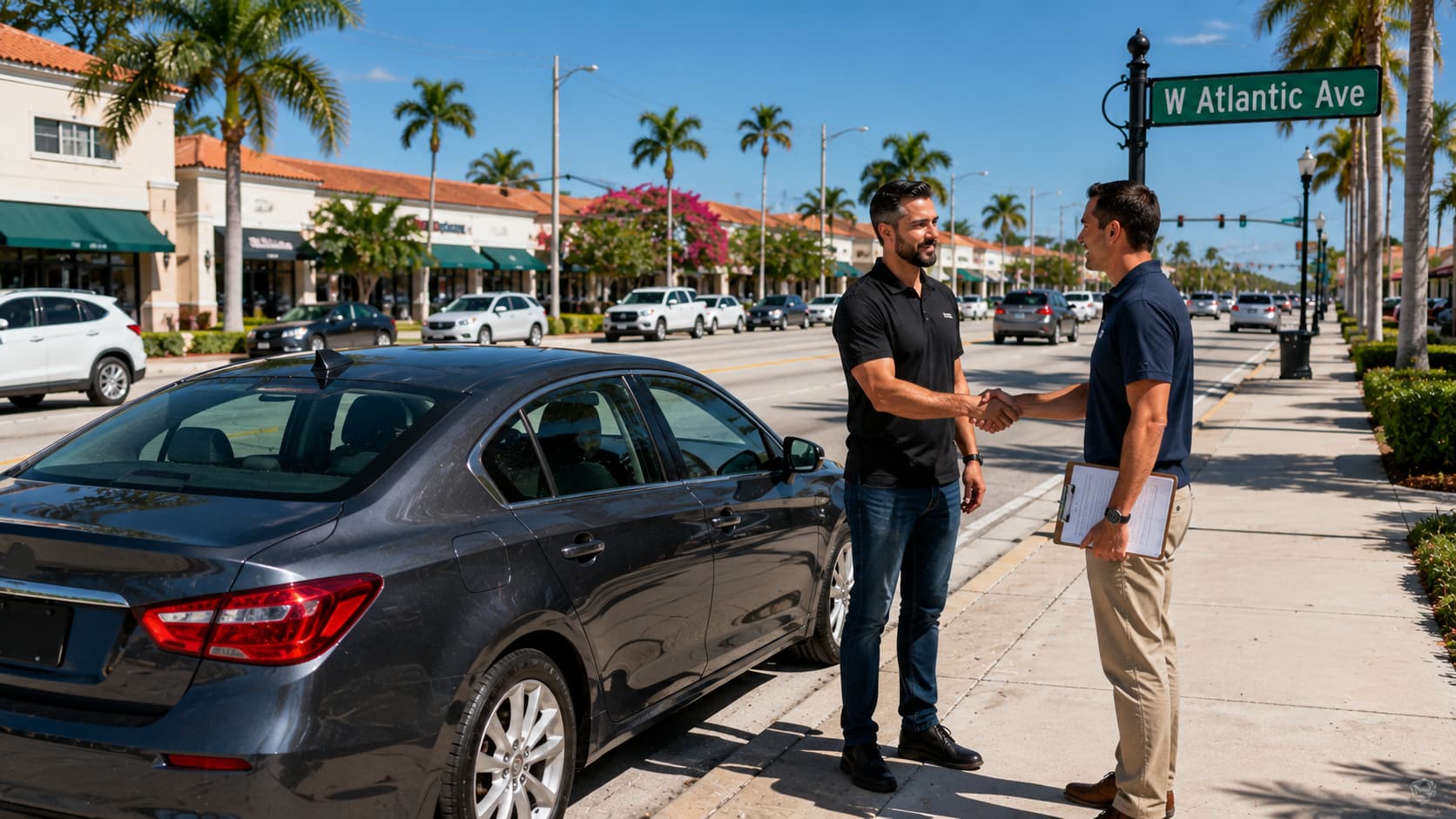
At Cash Now Auto, our About Us philosophy is centered on transparent, safe, and fully compliant transactions. We operate directly within Delray Beach and across Palm Beach County, giving local vehicle owners a stress-free alternative to confusing state bureaucracy.
- Immediate Legal Release: We complete all FLHSMV title reassignments and state notification filings on the spot, ensuring your legal liability ends the second the keys leave your hands.
- Direct Lien Resolution: If you have an outstanding auto loan, we coordinate with your financial institution, wire the payoff amount, and give you the remaining equity immediately.
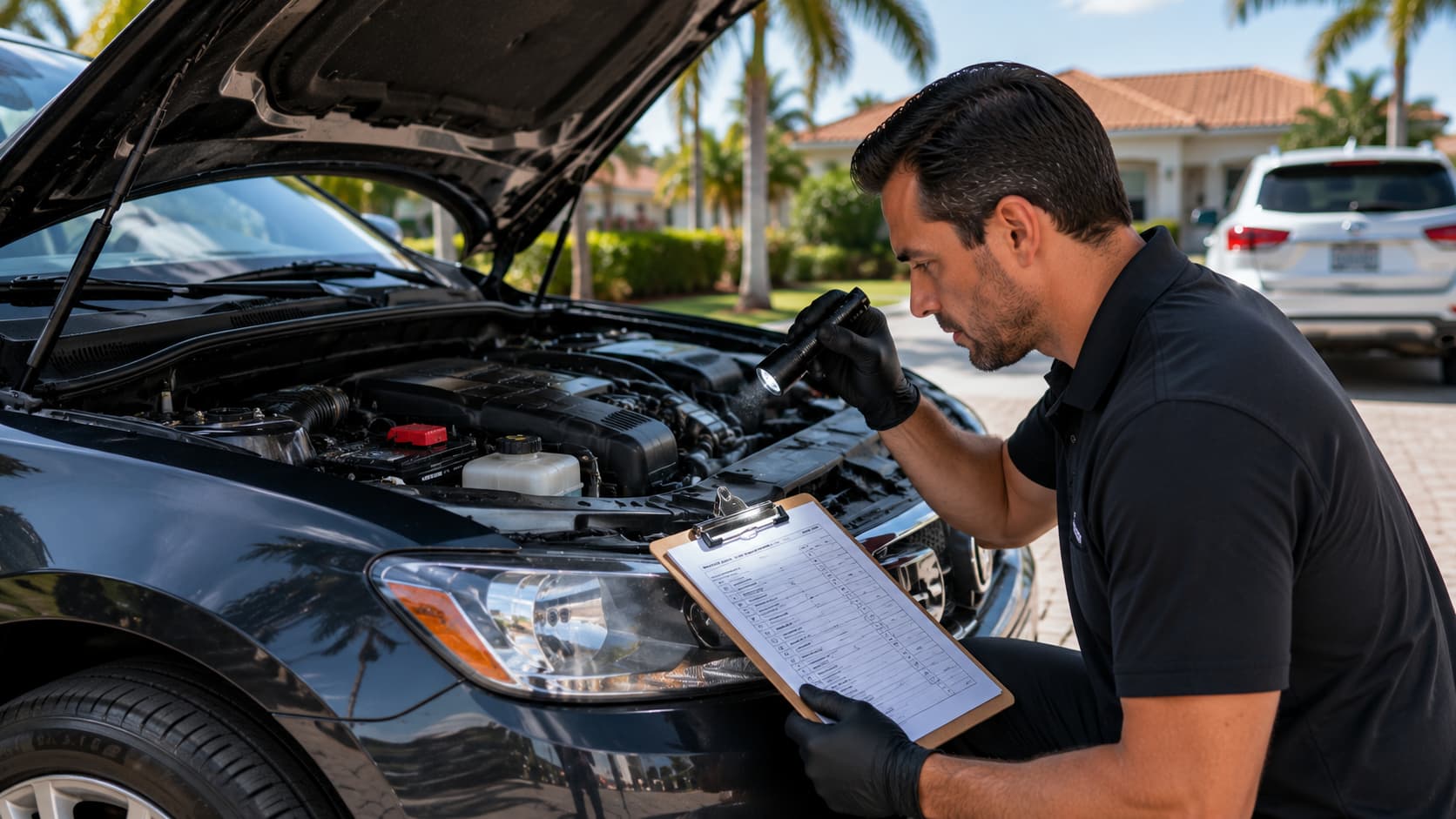
- Complimentary Concierge Pickup: We come directly to your home or office in Delray Beach, inspect the vehicle, handle the paperwork, and hand you guaranteed payment without any hidden administrative fees.
Florida Car Seller’s Legal Checklist
- [ ] Verify you possess the physical paper title or have an active electronic title record.
- [ ] Settle or document any outstanding liens with your lending institution.
- [ ] Fill out the “Transfer of Title by Seller” section accurately without erasures or white-out.
- [ ] Remove your Florida license plate from the rear bumper prior to handing over the vehicle.
- [ ] File Form HSMV 82050 (Notice of Sale) to officially sever your civil liability.
- [ ] Surrender or transfer your license plate at the Palm Beach County Tax Collector to keep your driver’s license valid.
Conclusion
Understanding Florida’s local car selling regulations isn’t just about following rules—it’s about protecting your financial well-being and peace of mind. By executing your title transfer properly, filing your state notice of sale, and retaining your license plate, you eliminate liability and walk away with confidence.
If you want to bypass the paperwork headache, skip the DMV lines, and get top market value for your vehicle, visit our website today. Get your fast, transparent valuation and discover just how simple it is to sell my car for cash today in Delray Beach!