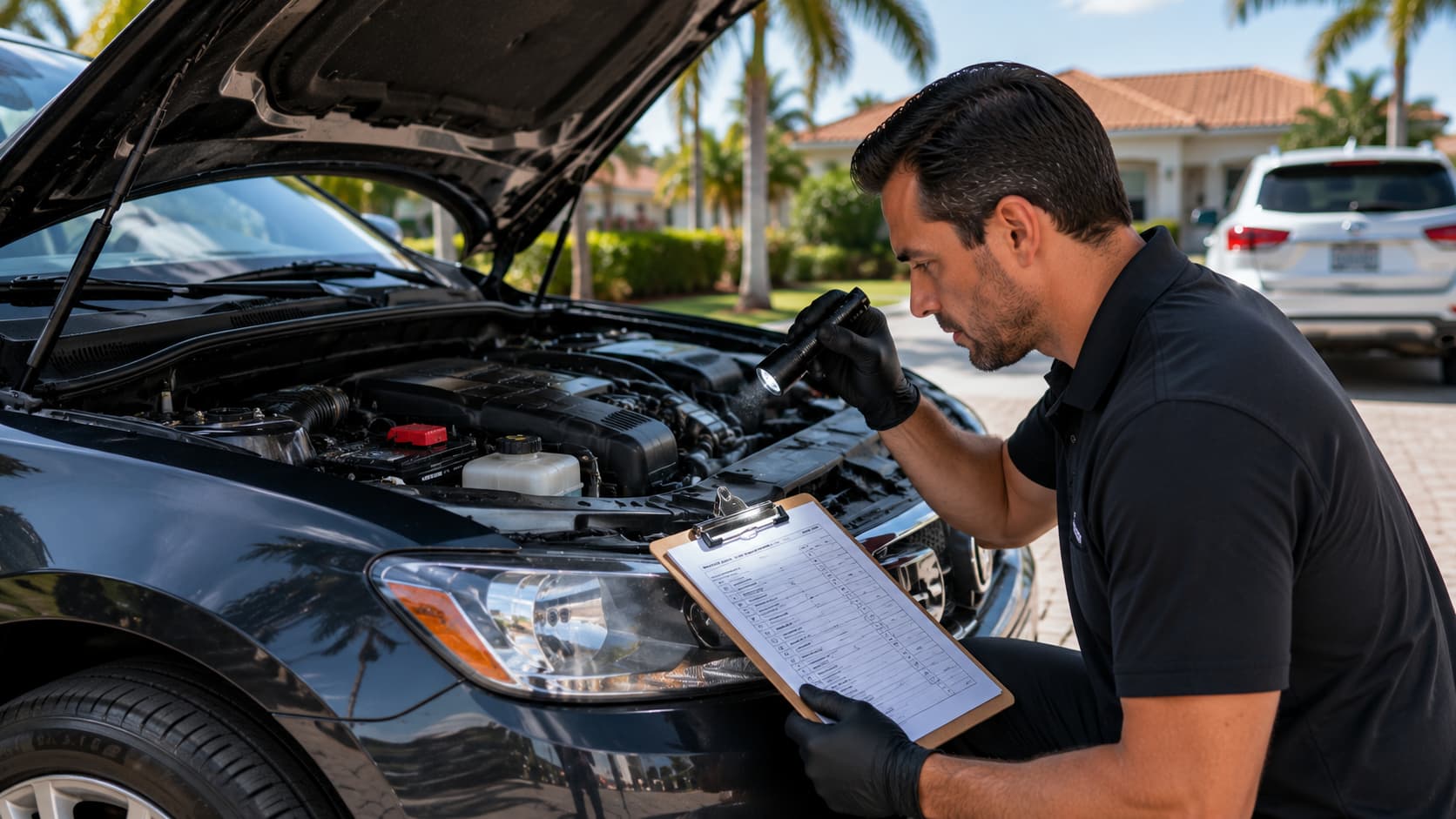
If you’ve ever watched a professional car appraiser walk around your vehicle with a clipboard, flashlight, and tire tread gauge, you know the feeling. It’s equal parts nerve-wracking and mysterious. Whether you’re pulling up to a traditional dealership in Palm Beach County or preparing for an at-home inspection with a direct buyer in Delray Beach, that multi-point check sheet determines the exact dollar amount placed on your asset.
In the Sunshine State, auto inspections come with a unique twist. The intense climate, humidity, salt air, and stop-and-go coastal traffic mean that Florida buyers look for very specific signs of wear that appraisers in other states might completely overlook.
If your primary goal is to sell my car for cash in Delray Beach, getting inside the mind of a professional appraiser is your best secret weapon. Here is a comprehensive, insider breakdown of what Florida buyers examine during a multi-point inspection, how it impacts your payout, and how to prepare so you don’t leave money on the table.
1. Under the Hood: The Heat and Humidity Stress Test
Florida’s heat is relentless. Between scorching summer afternoons and idling in traffic along Atlantic Avenue with the air conditioning blasting, a vehicle’s engine bay endures intense thermal stress. During a multi-point inspection, buyers immediately check how well the cooling and electrical systems have weathered this environment.
Key Hotspots Appraisers Inspect:
- Radiator and Cooling Hoses: Rubber degrades rapidly under extreme heat. Appraisers squeeze upper and lower radiator hoses checking for soft spots, brittleness, or hair-line cracks. Any sign of coolant crusting around clamps or reservoirs indicates a potential leak.
- The Battery and Terminal Posts: Heat kills car batteries faster than cold weather. Inspectors check for white or greenish corrosion on the battery terminals and verify the battery’s manufacturing date.
- Drive Belts: Serpentine belts are visually checked for fraying, micro-cracks, or glazing, which are accelerated by high ambient temperatures.
- Fluid Clarity and Levels: Beyond checking the oil level, inspectors analyze fluid quality. Dark, burnt-smelling transmission fluid or dirty brake fluid indicates neglected maintenance, leading to immediate deductions from your initial valuation.
2. Air Conditioning & Climate Control Systems
In most parts of the country, a weak A/C system is a mild inconvenience. In South Florida, it’s a total dealbreaker. A malfunctioning climate control system can easily wipe $500 to $2,000 off a vehicle’s appraisal value because buyers know retail customers simply won’t purchase a car without ice-cold air.
What the Inspector Tests:
- Vent Temperature Output: Appraisers use an infrared thermometer inserted into the dashboard vents to verify that the system cools down to the proper range (typically between 38°F and 45°F) within a few minutes.
- Compressor Engagement: They listen closely when the A/C is turned on to ensure the compressor clutch engages smoothly without grinding, squealing, or causing erratic engine idling.
- Dual-Zone & Rear Vents: In SUVs and luxury sedans, every zone is tested to confirm blend door actuators are working properly.
3. Exterior & Underbody: Sun Exposure and Salt Corrosion
Living near the coast comes with a hidden cost for automobiles: salt air and intense UV radiation. Even if a vehicle has never been in an accident, environmental damage can severely impact its aesthetic grading.
What Appraisers Look For:
- Paint Condition & Clear-Coat Failure: Clear-coat peeling or paint oxidation on flat horizontal surfaces—like the hood, roof, and trunk lid—is extremely common in Delray Beach. Appraisers check if the paint can be restored with a simple buff or if a full panel repaint is required.
- Headlight Clarity: Sun-baked, hazy, or yellowed headlight lenses are flagged immediately during exterior checks.
- Undercarriage Surface Rust: While Florida doesn’t salt its roads like northern states, cars parked near the beach constantly absorb airborne salt moisture. Inspectors look underneath the chassis for surface rust on exhaust pipes, suspension arms, and frame mounting points.
- Tire Tread and Rubber Degradation: Beyond measuring tread depth with a gauge, appraisers check the tire sidewalls for “dry rot”—tiny cracks caused by sun exposure and heat cycles.
Before sinking your savings into cosmetic fixes or repainting panels to pass a private buyer’s strict eye, take a look at our expert guide on when to fix your car before selling vs. when to sell as-is to avoid spending money you won’t recover.
4. Brakes, Tires, and Suspension Geometry
Florida’s terrain might be flat, but frequent stop-and-go traffic combined with heavy summer rainstorms puts immense pressure on a car’s stopping power and traction systems.
| Component inspected | What Appraisers Check | Common Deductions |
| Brake Rotors & Pads | Thickness of pads; scoring or rust lip on rotor edges. | $250–$600 per axle for replacement |
| Tire Condition | Uniform tread wear across all four tires; date codes. | $400–$1,200 for a fresh set |
| Suspension Bushings | Worn control arm bushings, leaking struts, or dry ball joints. | $500–$1,500 depending on make/model |
| Steering Alignment | Uneven inner/outer tire wear indicating alignment issues. | $100–$300 deduction |
Inspectors also take the car for a quick test drive around the block to listen for clunks over speed bumps, feel for steering wheel vibrations at highway speeds, and check if the vehicle pulls to one side during hard braking.
5. Interior Wear, Electronics, and Moisture Issues
Florida’s high humidity and sudden afternoon downpours make interior inspections particularly thorough.
Critical Interior Checks:
- Moisture & Odor Detection: Inspectors lift the floor mats and check the spare tire well in the trunk for trapped water or mildew smell. Leaky sunroof drains or degraded door seals can cause hidden water pooling that damages electrical modules.
- Dashboard Cracking & Leather Wear: Sun heat causes vinyl dashboards to crack and leather seats to dry out and split. Appraisers grade interior wear strictly based on these environmental factors.
- Electronic Diagnostics: A OBD-II scanner is plugged into the vehicle’s diagnostic port to check for stored or pending trouble codes—even if the “Check Engine” light isn’t actively illuminated on the dash.
To understand how mechanical condition, age, and market trends combine to influence your final offer, read our deep-dive analysis on how car depreciation really works: understand the market.
How Private Buyers vs. Professional Services Handle Inspections
Passing a multi-point inspection with a private buyer can be an exhausting ordeal. Private buyers often drag out the process by taking the car to an independent mechanic, haggling over every minor scratch, or demanding huge price drops for routine wear-and-tear items.
When you decide to sell my car for cash today, working with a direct buyer simplifies the inspection process. Professional buyers conduct practical, streamlined evaluations designed to confirm basic safety and operation rather than picking apart minor cosmetic flaws.
The Cash Now Auto Advantage
At Cash Now Auto, our philosophy is built on speed, local transparency, and zero hassle. We understand South Florida driving conditions better than national corporate chains. We know that a minor sun-faded headlight or normal brake wear shouldn’t disqualify your vehicle from getting a competitive cash price.
Why Delray Beach Sellers Choose Us:
- Fast, Fair Evaluations: We evaluate your vehicle based on real-time local South Florida market value.
- We Come to Your Driveway: No waiting around in a crowded dealership service bay while a mechanic inspects your car.
- Instant Cash On the Spot: Once the quick physical verification is complete, we handle the FLHSMV paperwork and hand you your payment immediately.
Final Checklist: How to Prepare Your Car for an Inspection
- [ ] Give it a quick wash and vacuum: A clean car signals to the inspector that the vehicle was well maintained.
- [ ] Top off essential fluids: Ensure windshield washer fluid, coolant, and oil are at proper levels.
- [ ] Clear out personal items: Remove clutter from the glovebox, trunk, and door pockets so the inspector can easily check every compartment.
- [ ] Gather documentation: Have your Florida title (or lien payoff details), registration, and service records ready on the seat.
Conclusion
A multi-point inspection doesn’t have to be intimidating. By knowing what Florida buyers look for—from A/C performance to sun wear—you can enter the transaction fully prepared and confident in your car’s true value.
If you are ready to skip the stressful mechanics, avoid dealership haggling, and secure a transparent payout today, visit our our website. Get your fast, no-obligation valuation and see how simple it is to sell my car for cash today right here in Delray Beach.